Estimated read time: 6 minutes
If you own land in Victoria, you may be sitting on an untapped income stream.
The real question isn’t whether short stays work — it’s whether they work well enough to justify a $125,000 build.
Regional tourism continues to perform strongly across the state, with travellers actively seeking private, experience-driven accommodation instead of large, impersonal holiday homes.
According to the Australian Bureau of Statistics, regional visitation has remained resilient, supporting demand for boutique stays across Victoria. (ABS regional tourism data)
So what does a realistic short stay ROI in Victoria actually look like when you run conservative numbers?
Let’s break it down properly.
The Real Numbers: What a $125K Tiny Stay Can Earn
To avoid hype, we’ll use moderate assumptions:
- Turnkey tiny home build: $125,000
- Nightly rate: $250
- Occupancy: 60% annually
Gross Revenue
$250 per night × 219 nights per year (60% occupancy) = $54,750 gross annual income
This occupancy rate accounts for seasonality and avoids inflated projections.
Operating Costs
Now subtract realistic expenses:
- Cleaning & linen
- Utilities
- Booking platform fees
- Insurance
- Minor maintenance
For a well-designed short-stay tiny home, operating costs typically sit around 25% of gross revenue.
25% of $54,750 = approximately $13,700
Net Income
$54,750 gross – $13,700 expenses = ~$41,000 net annual income
ROI Calculation
$41,000 ÷ $125,000 = ~32% annual return
Even at 50% occupancy, the return still approaches 25%.
Importantly, this is based on the tiny home alone — not a large secondary dwelling build. A simple fire pit, outdoor seating and thoughtful landscaping are enough to create a compelling guest experience without major infrastructure costs.
What Makes the Numbers Work
Not every tiny home will achieve 30% returns. Performance depends on strategy.
1. Location Appeal
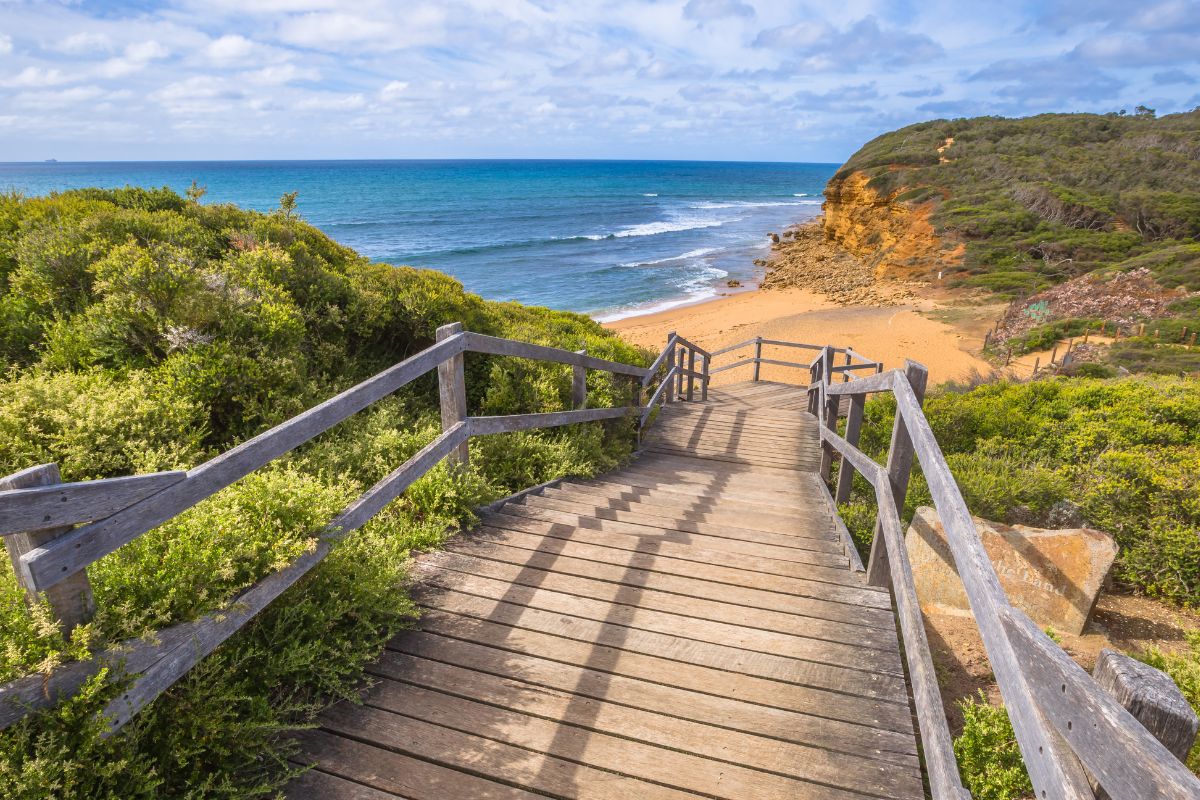
Coastal and regional Victoria remain strong short-stay markets. Proximity to wineries, beaches, farmland or bushland increases perceived value.
Tourism Research Australia continues to report demand for regional accommodation experiences across Australia.
2. Premium Design (Not Cheap Builds)
There is a clear difference between:
- A budget tiny house
- A purpose-built short-stay tiny home
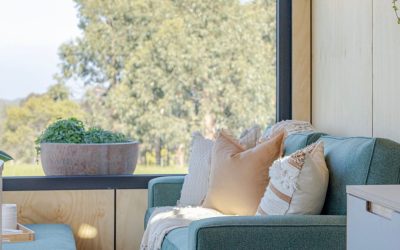
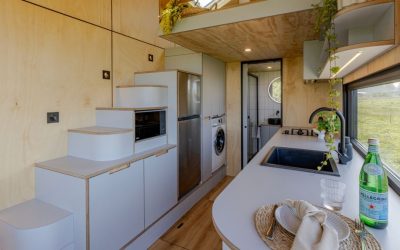
Large windows, high ceilings, quality finishes and a comfortable bathroom allow you to confidently charge $250+ per night.
Cheap builds compete on price. Premium builds compete on experience.
3. Off-Grid Flexibility
Self-contained systems reduce infrastructure barriers. Limited sewer or power access doesn’t automatically stop the opportunity.
That efficiency is what makes the short-stay model scalable on private land.
4. Guest Experience
- Privacy.
- Natural outlook.
- Comfortable interiors.
- Simple outdoor features like a fire pit.
You don’t need major construction. You need atmosphere and comfort. When those elements are right, occupancy follows.
A Builder’s Perspective (Why Strategy Matters)
As a Surf Coast-based registered builder with over 30 years of industry experience, we’ve seen first-hand that tiny homes designed specifically for short-stay use perform very differently to generic builds.
- Window placement affects light and reviews.
- Insulation affects comfort and guest satisfaction.
- Layout affects repeat bookings.
Short-stay performance is engineered — not accidental.
That’s why our models are purpose-built for income generation rather than downsizing alone. (Check out our – Sunrise Haven Model Page)
What About Council, Insurance and Risk?
Every investment has variables.
Council Requirements
Planning considerations vary by municipality. It’s essential to understand local rules before listing.
Insurance Structure
Classification matters, particularly if the tiny home remains on wheels.
Seasonality
Some regions experience winter dips, which is why conservative occupancy modelling is critical.
With proper strategy, these are manageable variables — not deal breakers.
Is This Right for You?
A short-stay tiny home makes sense if you:
- Own land in Victoria
- Have access to ~$125,000 capital
- Want semi-passive income
- Prefer flexibility over long-term tenancy
- Are interested in boutique hosting
It may not suit someone seeking completely hands-off investing.
But for landowners seeking yield and control, it’s one of the most efficient small-footprint income assets available.
Key Takeaways
- A $125K tiny home can conservatively generate ~$40K net annually
- 60% occupancy at $250 per night delivers strong yield
- Premium design directly impacts ROI
- Off-grid flexibility reduces infrastructure barriers
- Short stays often outperform long-term rentals in regional Victoria
Want to See What Your Property Could Earn?
Every block is different. Demand varies by region. Positioning matters.
If you want to calculate your own short stay ROI in Victoria, we’ve made it simple.
Call us today on 0455 374436 and let us walk you through the process.