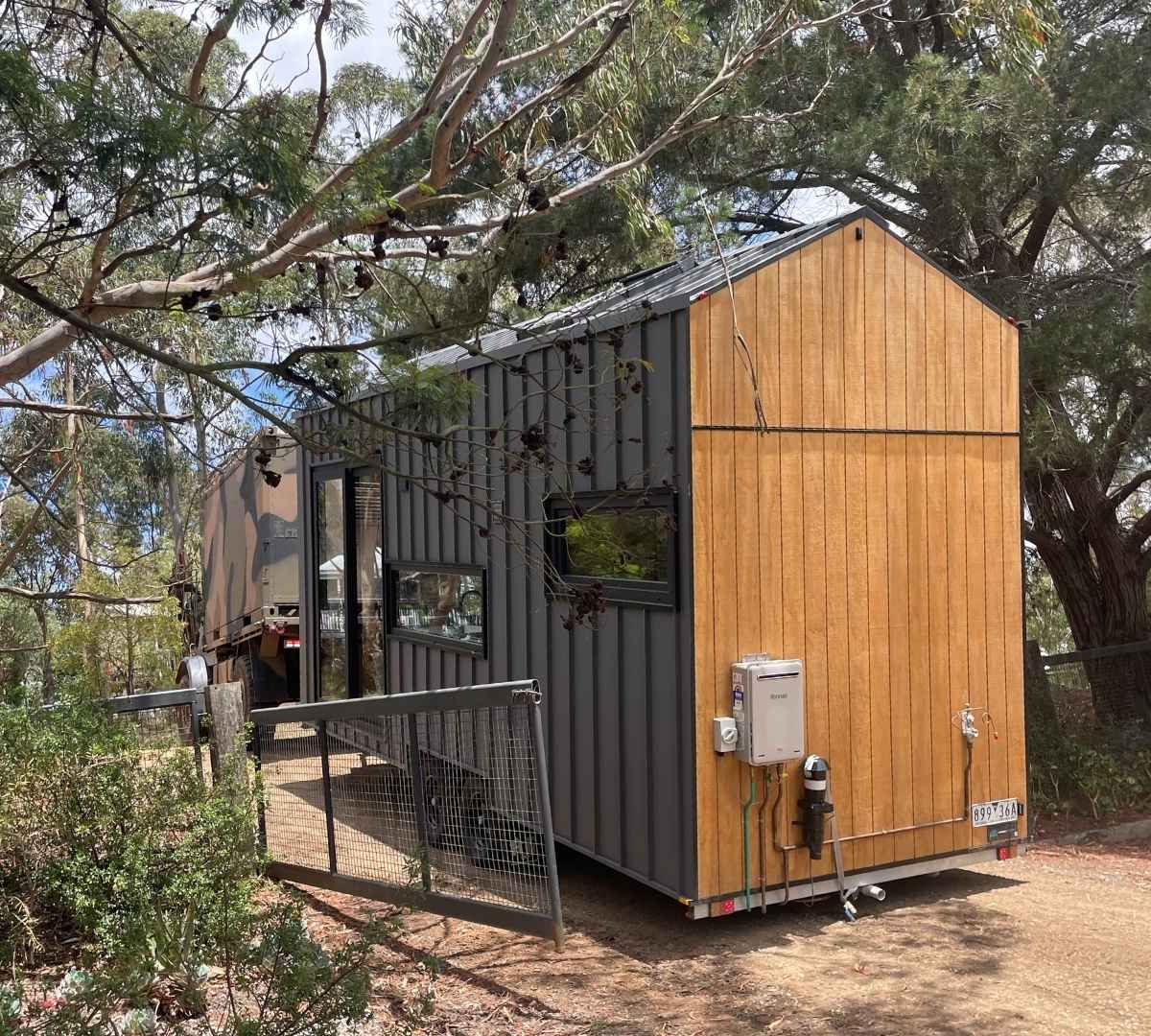
If you’re weighing up a tiny home on wheels for your property, site access for a tiny home on wheels is one of the two things that trips up more buyers than anything in the brochure — the other is services, which we cover in a companion article. It’s not that access is complicated. It’s that most landowners have never had to think about it before. A tiny home on wheels doesn’t walk onto your block. It arrives on a truck or low-loader, and every metre between the road and its final resting spot needs to be wide enough, tall enough and firm enough to get it there. Here’s what that actually covers, and where to go for the specifics that apply to your property.
Why access catches people out
Most buyers spend their time on floor plans, finishes and where the home will sit once it’s in place. Reasonable — that’s the exciting part. But a tiny home on wheels has to get to that spot first, and the trip from the road to the final site is where the surprises tend to live. Access isn’t one thing to tick off. It’s four separate checks: width, height, surface and gradient, and the final site itself. Each can rule a route in or out on its own.
Width — how much clearance you actually need
Road transport rules set out how wide a load can be before it needs a special permit, and those limits are set and updated by Transport Victoria — not something we’d want to quote a number on here, since permit rules do change and your builder or transport contractor manages this side of it for the trip itself. That part isn’t on you.
What is on you is your own driveway. It’s worth measuring the exact width of your gateways and your tightest corners yourself, and giving those measurements to your builder or transport contractor before you get too attached to a design. A sharp 90-degree turn that a car handles without thinking can be a genuine problem for something this size, and a driveway that looks generous next to a car can be tighter than it seems next to a low-loader. Width also comes down to what’s underneath the home itself — see why the trailer and frame matter for how that affects transport. If you’re not sure what to measure or how, that’s exactly the kind of question our team is happy to talk through with you.
Height — what has to clear the whole path, not just the parking spot
The same applies to height. Transport Victoria sets the limits for how tall a load can travel before it needs special permits, and your builder handles that side of the journey. What you can check yourself, right now, is everything overhanging your own driveway: trees, carports, verandas and power lines along the entire delivery path, not just the final parking spot. It’s a common mistake to check clearance at the site and assume the rest of the route is fine. Overhead power lines crossing roads are generally maintained well clear, but driveways on rural and coastal blocks often have mature trees or low structures that have never needed checking for a car and won’t have been on anyone’s radar until now.
Surface and gradient — what changes with the seasons
Driveway gradient and surface standards exist, and your builder or transport contractor will assess whether your slope and surface suit their delivery vehicle as part of planning your delivery. What’s useful to know up front is that a driveway that’s perfectly manageable dry in summer can be a genuinely different prospect after winter rain, and reversing a heavy trailer up any real incline is harder than it looks — even for an experienced driver. Unsealed driveways are the most common surprise here, particularly on larger rural or semi-rural blocks. Flag anything steep or unsealed early rather than assuming it’ll be fine on the day.
The final site
Once the vehicle is on your property, the last stretch matters too: is the intended spot reasonably level, reachable without crossing a neighbouring property, and within reach of wherever the delivery vehicle can actually get to and turn around? If you want to check anything property or planning related for your specific block, Surf Coast Shire Council is the right place to start. For a wider view of what Victorian councils typically expect, see our guide to tiny home on wheels regulations in Victoria. None of this rules a property out on its own — most access issues have a workaround, from a different entry point to a different vehicle. It’s just far better to know before delivery day than on it.
Manuka Tiny Homes insight
We’re a Surf Coast-based registered builder with 30+ years of building experience, and we host short-stay guests in a tiny home on wheels on our own property — so access isn’t theoretical for us. Coastal blocks around the Surf Coast bring their own version of this: sandy or unsealed tracks, tree-lined driveways, and properties where the obvious entry point isn’t always the easiest one. If you’re picturing your own coastal getaway, our piece on tiny homes on wheels on the Surf Coast covers what makes these properties work. We check access properly before delivery day, every time, because a good design doesn’t count for much if the home can’t get to where you want it. If you want a second opinion on your own property before you go further, reach out to us — that conversation costs nothing.
Key Takeaways
- Access is four checks, not one: width, height, surface and gradient, and the final site.
- Road-legal transport limits and permits are your builder’s responsibility to manage and confirm for your specific vehicle and route.
- Measure your own gateways and tightest corners rather than assuming a driveway that suits a car will suit a low-loader.
- Check the whole delivery path for overhead clearance, not just the final parking spot.
- A driveway that’s fine in summer can be a different story after rain — surface and gradient deserve their own look, and your builder’s assessment.
Is Your Property Access-Ready?
Access is likely to be straightforward if:
- Your driveway and gateways are a reasonably generous width with no sharp corners
- There’s clear overhead space the whole way from the road to the site
- The route is sealed or firm, without steep sections
- The final site is level and doesn’t require crossing a neighbour’s property
It’s worth a closer look before you go further if:
- You’re not sure how wide your gateways or tightest corners actually are
- There are mature trees, power lines or structures overhanging the driveway
- The driveway is unsealed, steep, or gets soft after rain
- You’d need to cross another property, or aren’t sure how the vehicle would turn once on site
None of these are automatic deal-breakers. They’re simply the things worth checking properly, early — with your builder, a delivery contractor, or our team — rather than assuming.
Could a Tiny Home on Wheels Work on Your Property?
If you have land and are thinking about extra guest accommodation, family stays or short-stay income, the first step is understanding whether your property is suitable.
Our free Property Readiness Check looks at access, site position, services, privacy, budget and intended use so you can see whether the idea is worth exploring further. If you’d rather talk it through first, reach out to us directly — we’re happy to answer questions before you fill anything in.
Important information: This article is general guidance only. Current road transport width and height limits, permit requirements and driveway standards are set by Transport Victoria and Australian design standards, and change from time to time — always confirm the current rules and your specific site access with your builder, transport contractor, or Transport Victoria directly, or reach out to us and we’ll point you in the right direction.